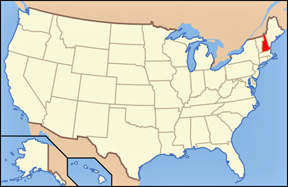
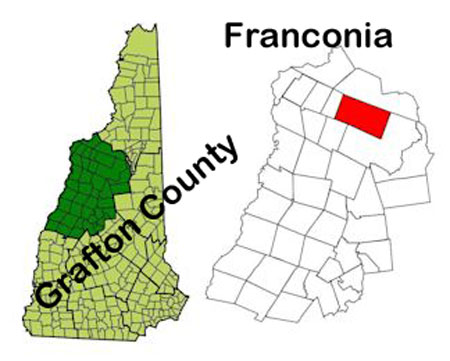
While in New Hampshire in
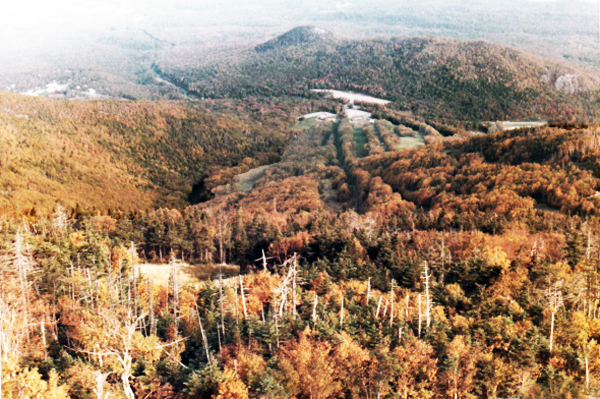
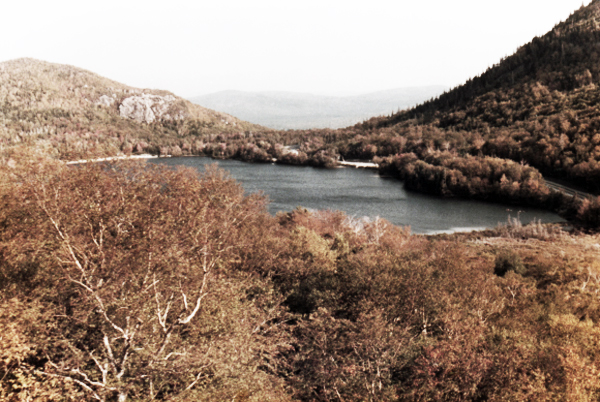
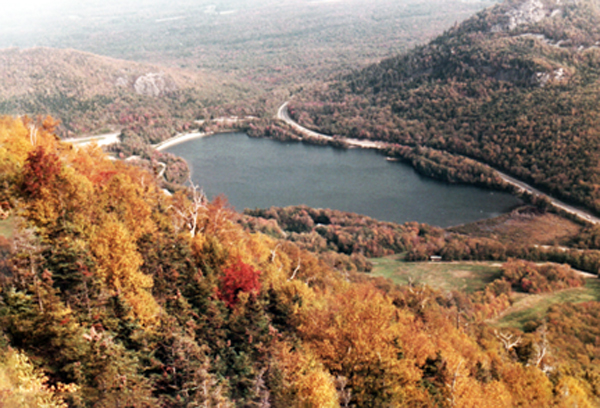
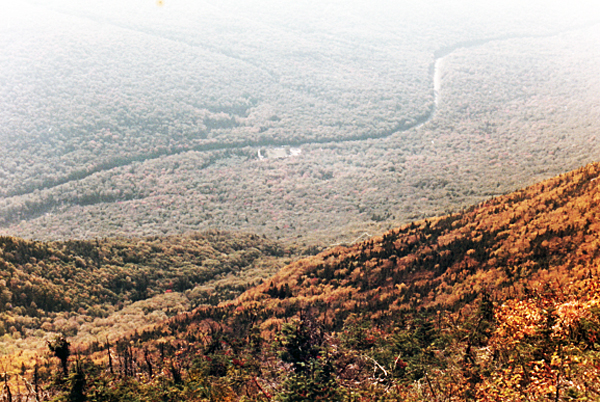
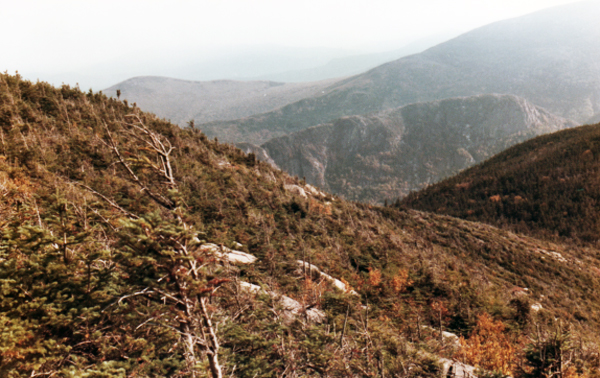
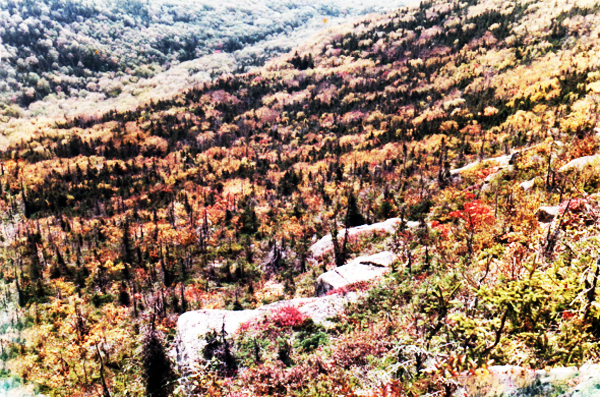
1984, Lee and Karen Duquette went to Franconia Notch State Park and
saw "The Old Man of the Mountain". Then they rode
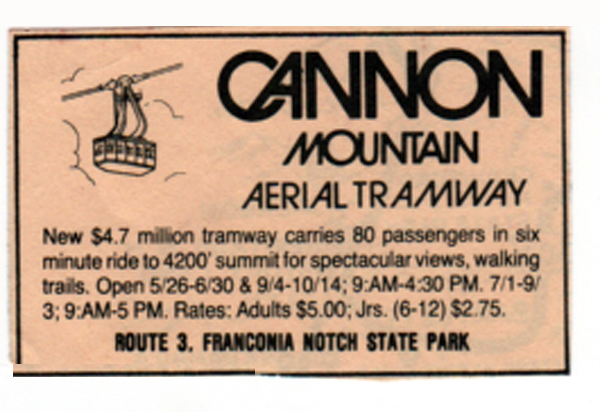
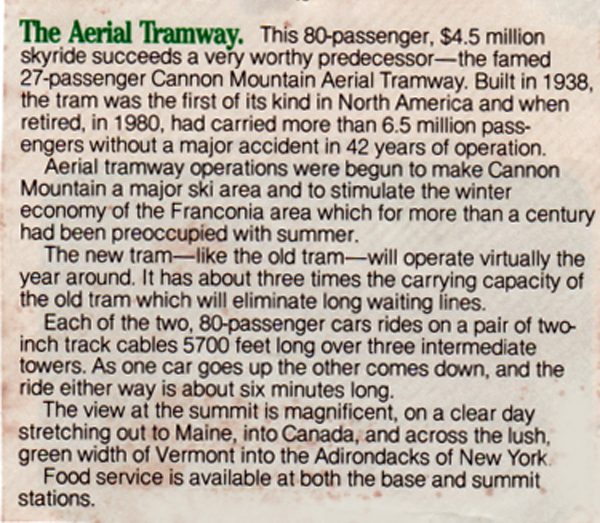
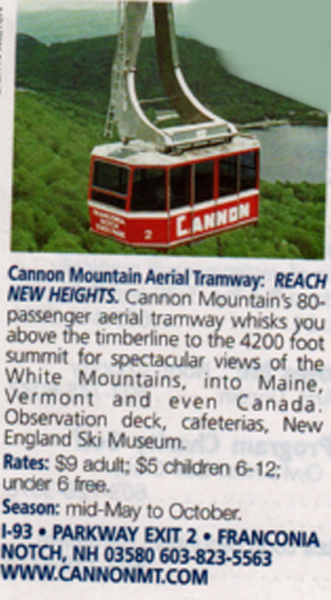
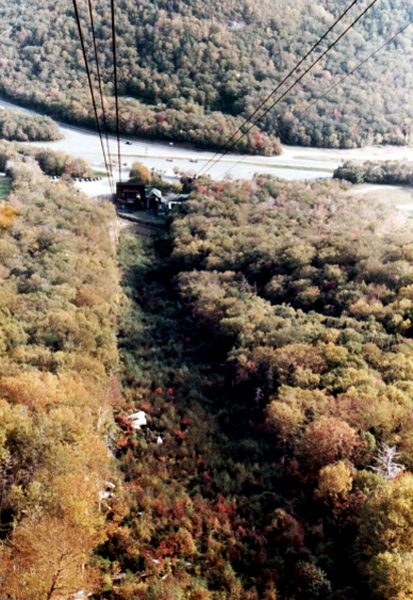
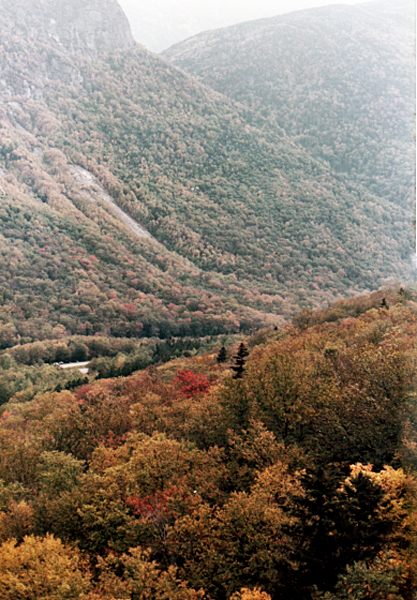
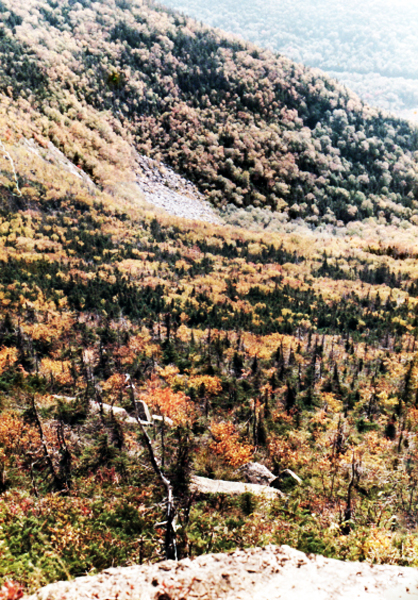
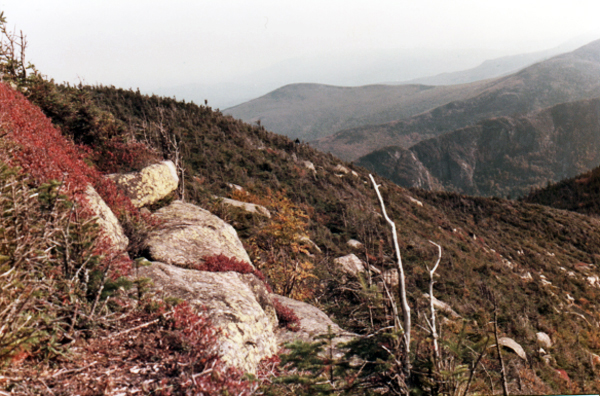
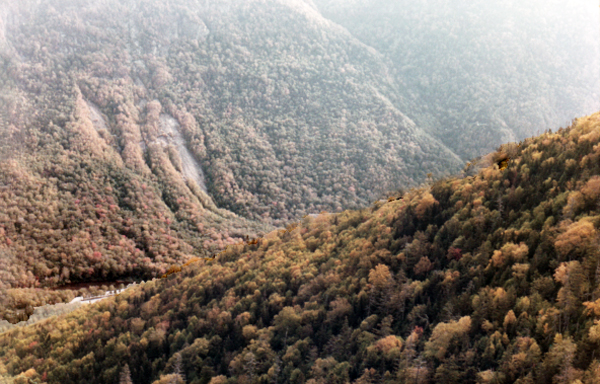
on The Cannon Mountain Aerial Tramway. Karen did not take a lot of pictures
in those days and many she did take were lost because she had to take
them out of her photo albums because there was no room in the RV for
photo albums (a decision she will always regret, even though Lee insisted).
And many photos faded and even Photoshop could not correct the colors.
But any photo is better than no photo and Flashbacks were not put on
this website until years after Karen started making this website. |
 |
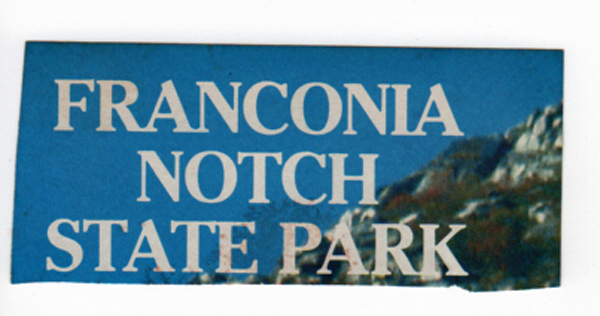
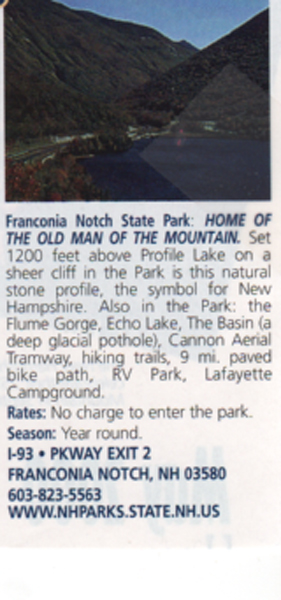
Franconia Notch State Park is a public
recreation area and nature preserve that straddles eight miles of Interstate
93 as it passes through Franconia Notch, a mountain pass between the
Kinsman Range and Franconia Range in the White Mountains of northern
New Hampshire. The northern part includes Cannon Mountain plus Echo
and Profile Lakes in the town of Franconia. The southern part includes
Lonesome Lake and The Flume in Lincoln. |
 |
 |
 |
 |
Unfortunately, some photos
definitely faded before Karen Duquette was able to post them here. |
 |
 |
 |
 |
 |
 |
 |
 |
 |
 |
 |
 |
The Old Man
of the Mountain |
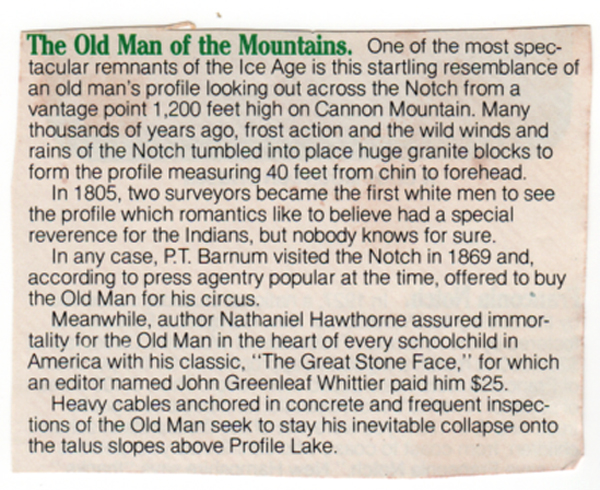
The profile formed during
the Ice Age, and was worshipped by the Indians as the profile of the
"Great Spirit". It was first discovered by white men in 1805.
The face measured 48-feet from forehead to chin and was 1200 feet above
Profile Lake, and 3200 feet above sea level. |
|
The mountain
is named for a rock formation in the shape of a cannon mound on the
summit. The Old Man of the Mountain, also called the Great
Stone Face and the Profile, was a series of five granite cliff ledges
on Cannon Mountain in Franconia, New Hampshire, United States, that
appeared to be the jagged profile of a human face when viewed from the
north. The rock formation, 1,200 feet above Profile Lake, was 40 feet
tall and 25 feet wide. It was formed by glaciers and erosion.
The Old Man of the Mountain was called "Stone Face"
by the Abenaki and is a symbol within their culture. It has also been
called "Great Stone Face" or "the Profile". It is
a symbol to the Mohawk people. The first written mention of the Old
Man was in 1805. It became a landmark and a cultural icon for the state
of New Hampshire.
It collapsed on May 3, 2003. After its collapse, residents considered
replacing it with a replica, but the idea was ultimately rejected. |
 |
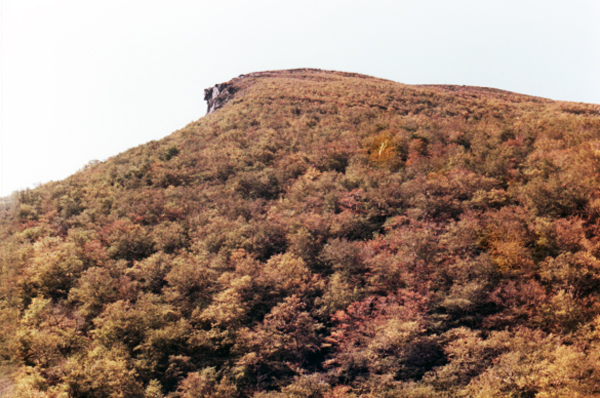
Below: Karen Duquette photographed
The Old Man of the Mountain in 1984, which is posted below. |
 |
 |
Below: The
Old Man of the Mountain |
 |
 |
Quote from
https://en.wikipedia.org/wiki/Old_Man_of_the_Mountain
-- Freezing and thawing opened fissures in the Old Man's "forehead".
By the 1920s, the crack was wide enough to be mended with chains, and
in 1957 the state legislature passed a $25,000 appropriation for a more
elaborate weatherproofing, using 20 tons of fast-drying cement, plastic
covering and steel rods and turnbuckles, plus a concrete gutter to divert
runoff from above. A team from the state highway and park divisions
maintained the patchwork each summer
Nevertheless, the formation COLLAPSED to the ground between
midnight and 2 a.m. on May 3, 2003. Dismay over the collapse was so
great that people visited to pay tribute, with some leaving flowers.
Early after the collapse, many New Hampshire residents considered replacement
with a replica. That idea was rejected by an official task
force later in 2003 headed by former Governor Steve Merrill. In 2004,
the state legislature considered, but did NOT accept, a proposal to
change New Hampshire's state flag to include the profile.
Karen Duquette is thankful that she got to see and photographed
The Old Man of The Mountain before it collapsed. |